Friday, January 15, 2016

Louis XIII de Rémy Martin: Staff Training

by Tobin Sharp
While we here at Hi-Time taste many different wines, spirits, beers, liqueurs, mixers and just about every beverage under the sun (that we carry), it is not every day that we get the chance to try one of the top spirits in the world: the Cognac Louis XIII de Rémy Martin.

Christophe Namer, our US West Coast Brand Ambassador for Louis XIII de Rémy Martin, stopped by the store to share some stories (and, of course, the Louis XIII!) about this historic Cognac, enjoyed by Charles de Gaulle to celebrate the liberation of Paris at the end of World War II, an inspiration to Winston Churchill when writing his memoirs, aged a minimum of 40 years and up to 100 years... then we nosed and tasted it.

I admit, it's probably been a decade since I last tried Louis XIII but my memory of it was certainly refreshed today and reinforced; yes, it is as good as I remember.  The floral notes, dried fruits, leather and spices in the nose lead to a palate reflecting the same and more with cigar box, tropical fruits, ginger, cinnamon and pure gravitas-- the deep amber color and leggy viscosity complete the package.  Speaking of the package, the Baccarat crystal decanter is the perfect housing for such an elegance of bottled time.  With 1,200 Cognacs in the blend and four generations of cellar master needed to produce such a masterwork, how else do you frame a work of art?  While certainly museum-worthy, we like to be able to showcase it in our Cognac case.  Ask about it next time you're in the shop and we'll show you where.

Friday, December 11, 2015

Classic Cocktails: The Sidecar

The Sidecar
by Michael Frank


The Sidecar cocktail is by far one of most memorable cocktails to come out of American Prohibition. It brings to the table an elegant yet fruit-forward flavor profile that’s complemented by a naturally high acid content. While it goes best with a salty snack, it also makes a perfect aperitif or an aperitivo-- especially with large fatty, rich meals. With all the fruit juice that goes into it, some are deceived into expecting a sweet, easy-to-drink cocktail. Don’t let it fool you though; If you do try to gulp it down you’ll end up coughing. This is a concoction of complexity and power that is designed to be savored and enjoyed patiently.

The common belief is that the sidecar cocktail is named after those funny little attachments that people can put on the side of a motorcycle for a passenger. Another theory as to the origin of the name is that it’s named after a sidecar shot. A shot of sidecar is something you probably won’t see in any first world bars in our modern era. In short, a sidecar shot is when the bartender takes his barmat and dumps whatever liquid has accumulated into a shot glass. It saves on product cost and people love it. In my last bar we did this all the time and believe it or not, it actually doesn’t usually taste half bad.

The lore reads that it was invented by a wounded army field captain that rode between a bar and his encampment in a sidecar during the battles of World War I. Sounds like a tall tale to me, but hey-- good stories sell drinks. 

The actual origin of the cocktail is traced back to the Ritz Carlton of Paris in 1922 and the American refugee bartender Harry MacElhone. Of course, this is a matter of some debate and some would attribute the original mixture to Robert Vermeire who published his book “Cocktails and How to Mix Them” the same year.

The original recipe calls for equal parts Congac, Triple Sec and Lemon Juice. I prefer a take on the more modern and popular version from Harry Craddock’s 1930 "Savoy Cocktail Book." My recipe for this cocktail follows that 1930s tradition while utilizing classic liquor selections and some “relatively” new mixology techniques. You will need the following:

For bar tools…
Jigger 666444
Beehive Juicer 106266
18oz weighted shaker 644344
28oz weighted shaker 678987
Hawthorne strainer 643543
Martini glass 703622


For consumables…
Camus Borderies VSOP Cognac 102722
Cointrieu 106340
Lemons


Step 1
Start by adding 3 ounces of Cognac.
Cognac is really the star of this cocktail and despite all the heavy sugars and citrus we’re building on top of it, we really want that original essence to shine through in all its glory. For this I wouldn’t select anything too elegant or smooth. I’m not suggesting the use of poor quality brandy either though, what we want is something with just a little bit of spice and bite. For me, I like to use Camus Borderies VSOP because of the unique baking spice characteristics that come through on the nose and palate as well as its long and bold finish.
Feel free to swap out and have fun with and other brandy, as well, even if it’s not Cognac. One of the primary factors in the difference between a brandy and a Cognac is that Cognac comes from Cognac, France, and has its own AOC (Appellation d'origine contrôlee, the French certification granted to certain French geographical indications for wines, spirits, cheeses, butters and other agricultural products). Even if someone somewhere else were to make the same spirit with the same grapes in let’s say Bordeaux, it could only be called brandy. One of my favorite substitutions is Spanish brandy such as Torres 10.


Step 2
Add 1 ounce of Cointreau.
I like to use Cointreau because it’s the most orange-y of all the orange liqueurs, also it's not overly sweet. You can use triple sec too, if you like, but keep in mind it will make things sweeter.


Step 3
Squeeze 1 ounce of fresh lemon juice into your jigger. Don’t do this over the shaker as it will make it hard to keep things accurate. When your jigger is full, dump the fresh squeezed lemon juice into your shaking tin.


Step 4
Fill your other shaker with ice, put the two together and shake the heck out of it! Make sure you hold both cups securely, we want this cocktail “in” you and your guests, not “on” you. When shaking, shake back and forth between the two bottoms of the cups to give it the best chance of marrying the ingredients. Do this for about 30 seconds. Don’t be shy, give it all you’ve got!


Step 5
Get your martini glass ready. Tap the two conjoined metal cups gently on the edge of your bar (or anywhere else) to break the vacuum seal you created. Take your hawthorn strainer, place it over the cup and carefully pour everything into your glass.


Step 6
Enjoy! Another technique you might want to try out would be putting it through a netted strainer on it’s way into the glass, this will give it a whole new mouthfeel. Also, feel free to swap out the base liquor. I made one recently with a heavily peated Scotch and it was great. Another option is to use different citrus: kumquats, maybe? Most importantly, have fun and experiment. The worst case scenario is that you’ll have to make another drink.
May your cocktail adventures be glorious!

Sidecar photo: foodspotting.com

Tuesday, November 3, 2015

Whisky Live: Los Angeles 2015 - 11/6/15

Whisky Live is this Friday, November 6th, at Loew's Hollywood Hotel up in LA, 6-10pm.  This is a great event for Whisky lovers of all stripes-- here are the main draws:

SAMPLE FROM OVER 150+ WHISKIES
VIP EXPERIENCE AREA
DELICIOUS DINNER BUFFET
MASTER CLASSES
LIVE ENTERTAINMENT 
COMPLETE EVENING OUT

Use the code "LA2015" for a 15% discount on tickets.  For more info, visit whiskyliveusa.com or whiskylive.com.

The Golden Palate Update and Final Countdown Date

Our two semi-finals took place last month and we haven't done an update in a while...

Gabe Barakat was victorious over Gail Roberts in a highly contested match with an 18-16 score.  The top wine of the night ended up with a pair scoring the same, both selected by Gabe: O'Shaughnessy "Howell" 2012 Cabernet Sauvignon and Kobalt 2012 Cabernet Sauvignon. We also had a tie for the next most popular wines of the night-- another tie, both wines selected by Gail: Malartic Lagraviere 2010 Bordeaux Blanc and Cheval des Andes 2010 Malbec/Cab.

John Pate came out on top after matching wines with Dan Williams (who had knocked out last year's 'Golden Palate' Zach Korhonen in his previous match).  The top wines of the night ended with a triple tie for 1st place: William Fevre "Vaudesir" 2013 Chablis selected by John and Kamen 2012 Cabernet Sauvignon & Law "Sagacious" 2012 Rhône Blend selected by Dan.

Our 'final countdown' showdown for The Golden Palate will take place in December so we have a bit of a breather before the combatants enter our wine bar ring: Thursday, Dec. 10th, 4:30-8:30 p.m., $35.


Wednesday, October 21, 2015

123 Spirits: Awesome Organic Spirits

Eliott, our 123 Organic Tequila brand ambassador, stopped by the store today to re-taste the staff on their lineup of organic Tequilas: blanco, reposado, añejo and 110 proof El Luchador.  Across the board, the six of us who went through these four Tequilas thoroughly enjoyed them-- these are the real deal.

You can read the full story about these Tequilas on their websites: www.123tequila.com & www.elluchadortequila.com.

Some of the key factoids about these Tequilas: they are the vision of Tequilero David Ravandi, they are certified organic; the agave is grown at an elevation of 4200'; they are wild fermented; they source their water on their property to cut the spirit down to a lower proof; they use the same agave (basically, the Blanco is the 'mother' spirit) with the difference being the time aged in barrel.

Blanco - agave-rich nose, peppery, sweet on the palate, very clean.

Reposado - white pepper and cola berry on the nose, spice, earth, green peppercorn, pure agave in the mouth.

Añejo - sweet agave, cola berry, cinnamon in the nose; agave, sweet spice, earth, lengthy finish.

El Luchador - 110pr - fairly mild nose with delicate scents of earth, white pepper, slight sweetness; sweet agave and citrus notes (Meyer Lemon? Yuzu?), brief flash of heat mid-palate but really approachable for the proof.  Cocktails, for sure.

Monday, July 20, 2015

From Mount Etna, Italy: Cantina Benanti


by Gary Faust

Last month, Salvino Benanti visited Hi-Time to share his wines and talk about his passion for the wines of Mount Etna. The Benanti family has been growing grapes and caring for some of the island's oldest vines since the late 1890s. They sold their grapes for decades until Salvino’s father, Giuseppe, decided to indulge his passion and began making wine in 1988. At the time, most of the wine produced in Sicily was sold in bulk and was not of very high quality. Mr. Benanti believed in the potential of the region and knew the combination of minerality and climate from Mount Etna made the wines capable of greatness. He risked his own money, focused on indigenous grapes from the island and strove to increase the quality of wines produced there.

He believed he could make high quality, ageable, food-friendly wines, which could compete favorably with other wines of the world. Over the years, his vision has come to fruition. The white and red wines made by Benanti display a combination of character and elegance. In time, others from Etna have followed Giuseppe’s lead and established the reputation of Etna as one capable of producing excellent wines.

After Giuseppe passed, Salvino and his brother Antonio carried on, maintaining the traditional style while also instilling a more disciplined approach to ensure consistency. Salvino sees himself as an ambassador for Benanti, but also of Etna- so convinced is he of the quality.

Sicily is a land of extremes, with snow visible on the Mount Etna for 8-9 months out of the year while the sun shines on the coast near the azure waters. The slopes of Etna provide ideal conditions for grape growing. The days are sunny and warm and the nights are cool, creating diurnal temperature swings, which enable grapes to ripen slowly and retain aromatics and acidity. 


Over the years, the Benanti family has acquired several plots of land within the Etna DOC. Some of these parcels include old ungrafted vines, which have survived the scourge of phylloxera. The island’s unique volcanic soil and dryness have protected these vines and Etna can boast some of Europe's oldest vines. These old vines have very low yields with excellent concentration of flavors.

The oldest vineyard sits at the top of a hill overlooking the winery and contains vines which are more than 100 years old. These Carricante and Nerello Mascalese vines sit at about 450 meters of altitude on the southeast slopes of the volcano. This exposure means they tend to be warmer than the rest of Etna, leading Benanti to generally be the first to harvest grapes on the mountain each year. Most of the winery's vines are head-trained.

The grapes are fermented with native yeasts in steel tanks (for the whites) or large old oak vats (for the reds), then transferred to old oak barrels of varying sizes for aging. Benanti uses mostly two- and three-year-old French oak barrels. Despite the winery's small size, they are among the best known of Etna's producers thanks to being some of the earliest pioneers in Etna's relatively short modern history of wine production. The fact that they make great wine might also have something to do with it. Benanti was awarded Winery of the Year by leading Italian Wine Guide Gambero Rosso in 2007 and by Wine & Spirits Magazine in 2012.

We tasted through several wines with Salvino and found the Benanti wines to be delicious. The 2004 Serra della Contessa is definitely in a sweet spot in its perfect stage of evolution.

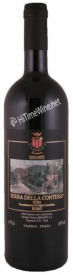
BENANTI 2004 SERRA DELLA CONTESSA $49.95 #301470

We are spellbound by the complexity of this perfectly aged wine from the historic Benanti family estate. This cuvee is composed primarily of Nerello Mascalese with a small amount of Nerello Cappuccio. Think of a hypothetical cross of Burgundian Pinot Noir and Nebbiolo, which is vibrant and fresh at 11 years of age. As Salvino says, “These are elegant wines for elegant food and elegant people.” We agree wholeheartedly and know our customers will enjoy this tremendous food wine, which pairs exceptionally well with lamb, pork dishes, sausage or even pizza!

ROBERT PARKER 93 POINTS - "Benanti's 2004 Serra della Contessa is a showstopper. This blend of 80% Nerello Mascalese and 20% Nerello Cappuccio is made from 100-year old vines, many of which date to pre-phylloxera times. The wine is fermented in oak vats, then racked into French oak barrels for aging. It reveals notable intensity and purity in its expressive layers of ripe fruit, leather, minerals, menthol, licorice and smoke. Supple, finessed tannins frame the gorgeous finish. Today the wine is quite primary but in time it will likely develop into an ethereal beauty. Anticipated maturity: 2009-2016."


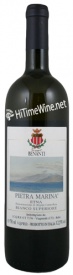
BENANTI 2010 PIETRAMARINA BIANCO SUPERIORE $46.98 #301366
Benanti allows PIETRAMARINA BIANCO SUPERIORE to rest on the lees after fermentation, imparting more complexity and fuller body. In a word, this wine was amazing, complex and capable of aging. This is an Italian white wine for lovers of white burgundy.

WINE ENTHUSIAST 95 POINTS - "This stunning, full-bodied wine is in the running as one of the best white wines in Italy. It’s perfumed with acacia flower, Spanish broom, beeswax, flint and tree fruit. The delicious palate delivers green apple, Anjou pear and mineral sensations of mesmerizing depth. It will develop even more complexity over time. Drink through 2025”


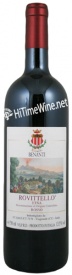
BENANTI 2010 ROVITTELLO ETNA ROSSO $39.98 #301373
WINE ADVOCATE 92 POINTS- “The 2010 Etna Rosso Rovittello is 80-20 -Nerello Mascalese and Nerello Cappuccio from the Contrada Rovittello on the north face of the volcano at 700 meters above sea level. Rovittello is a gorgeous wine with a long aging future ahead. There’s a degree of richness and plumpness that is rare to find in the generally austere red wines from Etna. Black cherry and black currants are backed by light touches of cinnamon and clove (it ages up to 12 months in used oak). Drink 2015-2026.”

Thursday, June 11, 2015

ITALY: MONTALBERA 2013 RUCHE "LACCENTO"

by Gary Faust


One of the best things about working at Hi-Time is sifting through thousands upon thousands of wines each year before finally falling upon a real under-the-radar gem. That's exactly what happened a couple of years ago during a trip to Italy when we came upon this incredibly cool wine. We had never heard of Ruché, but once we tasted it we were stunned; it was unlike anything else we had ever tasted! We brought it into the store and our customers embraced it enthusiastically, turning this little known grape into one of our most popular Italian wines. Before we knew it, we were in the midst of a Ruché craze! We’re thrilled to announce the latest vintage of Ruché has arrived and the new vintage is every bit as good as previous vintages if not better! 


Ruché (roo-kay) is an Italian red wine varietal from the Piedmont region that is used in making Montalbera Ruché "Laccento." The appellation was elevated to DOCG status in 2010, which is the highest recognition of quality for Italian wines. The grape, referred to as “The Red Prince of Monferrato,” is one of the lowest production varietals in Italy with only about 150 acres being farmed. It has been grown in Piedmont for at least one hundred years but has only recently been marketed and consumed outside of the region.

Its modern popularity and renaissance can be attributed to an enlightened parish priest named Don Giacomo Cauda. When he arrived at Castagnole Monferrato in the 1970s, he found 10 rows of Ruché planted on the parish property. Struck by the characteristics of the variety, he became fascinated and fell in love with its quality, which was apparent in the grapes even while they were still on the vine. He began planting additional vines and championed Ruché to anyone who would listen. Don Cauda described the wine in one of his writings, “It has perfect body and balance of unique aromas, flavours and fragrances. When drunk in moderation, it liberates the spirit and opens up one’s mind.” We couldn’t agree more!

Long ago the local people used to consider Ruché a wine for celebrations and over time it acquired an aura of legend. This nectar in the collective imagination became the wine that accompanied the Astigiani troops in the Crusades.


The origin and name of this particular cultivar are unknown although there are many hypotheses. One is that it comes from San Rocco, a community of monks devoted to the saint who introduced its cultivation in that area. Others believe the name derives from the Piedmontese word "roche," referring to a vine grown in the areas protected by the Monferrato Hills. Recent studies and meticulous analysis of the vine and its features would seem to show that Ruché derives from the ancient vines of Haute-Savoie. The mystery of Ruché therefore remains unsolved, while the only certainty seems to be the feelings that always come with every sip. The charm and mystery of this wine are real with a taste so special and unique that it clearly stands out, making it a true gem of viticulture in this region.


MONTALBERA 2013 RUCHE "LACCENTO" $25.95 [302131]
The Montalbera 2013 Ruché "Laccento" received the coveted Tre Bicchieri (Three Glasses) award from the noted Italian wine magazine Gambero Rosso. It also received a Gold Medal at the Decanter Wine Awards. Famed Italian wine critic and author Luca Maroni has called this wine, “An absolute masterwork of nature, technique, humanity and pure passion..." and gave it a 99 point rating.

Medium ruby in color. The flavors one encounters are like taking a walk through a farmer’s market and filling your bag with a selection of fresh cherries, blueberries and blackberries. Next come Indian spices such as cardamom and nutmeg followed by a bouquet of violets and roses. On the palate, the wine is delicious and medium-bodied with silky smooth tannins. It pairs well with most foods including the often challenging Asian-inspired dishes and is tremendous on its own.


LUCA MARONI 99 POINTS - "It is thanks to the vintage’s warmth, but also to the reduced yield and the selective viticulture that for its first time the Ruchè donates such a fleshy thickness. Tannins are pronounced enough to evolve those strawberries you get on the nose and to the taste assuming the sublime fleshiness of a blackberry. The aroma’s masculinity increases in volume, no damage being done to the fruit’s wonderful smoothness, striped in sweetness and veins of forest berries which are integral and sharp to the olfaction just like still in the raw. The taste’s balance gives harmonious softness counterpointed by tannic savory and corroborated by mineral salinity. This is truly a wine which viticultural and oenological value is sublime; it is a naturalistic and technical creation whose analytical merit appeals universally to the senses."